Poor Bob's

Château Fontareche
Vieilles Vignes Selection Corbières Carignan Blend 2018

Rich smells of milk chocolate, ripe blackberries brambles and fresh blueberries, with hints of white mushroom, tart cherry, and saltwater taffy. Medium-light weight, deep opaque red with rich oily umami mouthfeel and light red fruits like cherry and plum on the palate, and soft well polished black tea tannins lingering nicely on the finish. Very interesting red, like a poor-mans-Ho-Brion (😉), would probably go well with tomato-cream sauce dishes and grilled meats or great by itself. Great value — 6 years ago
Domaine de l'Olivette
Bandol Mourvedre Blend 2017


Classic Bandol rose’ with a full mouthfeel. Mouthwatering. I agree with @Geoff Troup, poor man’s Tempier. Killer value. — 7 years ago
Subject To Change Wine Co
Moon Juice Poor Ranch Zinfandel Syrah 2018

Open it. Pour out a glass. Pour that glass back into the bottle. Cork it. Stick it in the fridge. 24 hours later, drink it cold with grilled meat while watching NBA playoffs. Fart on your wife’s leg while she’s napping next to you on the couch. Repeat next weekend — 8 years ago

Vinca Minor
Poor Ranch Carignan Rosé 2017

Vinca minor 2017 Mendocino Hawkeye ranch old vine carignan rose. Flowers, strawberries, lemongrass. Just perfect. — 9 years ago
Sandhi Wines
Bent Rock Sta. Rita Hills Chardonnay 2014

THE. BEST. DOMESTIC. CHARD!!!!!! Yes, yes, yes. I'm blown away. This is the best domestic chard I've ever drank. This particular vintage is killer. I could poor this in a lineup of top notch Meursault and none would be the wiser, that's how good this is. Intense smoke/funk brought on by minerality that most domestic producers could only dream of. A legendary wine in my book. @June's All Day, Austin TX — 9 years ago
Le Clos du Caillou / Domaine du Caillou
Cuvée Unique Vieilles Vignes Côtes du Rhône Red Rhone Blend 2005



Umathum
Zweigelt

Poor REM. Good otherwise. Glass cork — 5 years ago
WALT Wines
Bob's Ranch Sonoma Coast Pinot Noir 2017
Plummy dark color. Black cherry, blackberry, smoky earth, light chocolate. Big and fruit forward, but very refined and elegant. This is a treasure of a RR Valley PN. — 7 years ago
Domaine Chavy-Chouet
Les Casses-Têtes Meursault Chardonnay 2016


I love this site. It’s so distinct and in the right hands makes 1er quality wine that’s like a mini Perrieres as it has the same super rocky poor soil. Meyer lemon, butter, grilled nuts, mineral, tree bark, so earthy and mineral. Palate is so elegant and just beautiful. Wow. Hauntingly elegant. So mineral with some buttery fruit but man this is wow. This has really caught me off guard. Fuck. What a beautiful wine. — 7 years ago

Sans Wine Co.
Poor Ranch Vineyards Rosé of Carignan 2017

Fun and funky. — 8 years ago

Maître de Chai
Carignane Poor Ranch Mendocino 2015
Oh yeah. Pure, classic Carignane with great acid & fine tannin. Good to see @Delectable Wine expert reviewers are back at it — 9 years ago
Tardieu-Laurent
Côte-Rôtie Syrah 1999
Taken to the outdoor theatre in Carmel. Dark and opaque. Exotic exciting nose. Notes of black cherry, dark soil, some menthol and some crushed granite stone. Always think of this as a poor mans La La and this fit that bill. Had a large stash of these and sadly it’s almost gone. — 5 years ago


Seresin
Sauvignon Blanc 2018

Very good for Marlborough Kiwi Sauvignon Blanc, which are usually very poor. Smooth and easy drinking but with personality. — 6 years ago
Domaine Servin
Selection Massale Vieilles Vignes Chablis Chardonnay 2017

Poor man’s Raveneau...which is no faint praise. All Servin’s ‘17s are beyond great. — 7 years ago
Kosta Browne
Sonoma Coast Pinot Noir 2015
Big Sonoma Pinot framed by very fine tannins and a bit of heat (14.3% abv). Well made, but poor QPR, and a bit too much ripeness for my tastes. — 7 years ago
Shypoke Cellars
Twin Rock Poor Ranch Zinfandel 2014

Diggin it. Great acid to accompany the juicy melange of ripe fruit. Tannins are incredibly soft, pliant even. Nothing over the top, nothing out of place, true Zin with an expression of its old-vine, dry farmed, and rocky upbringing. Morello cherry, Santa Rosa plum, strawberry confit, sweet medicinal herb, fern, white pepper, purple flowers, something slightly meaty/savory that really adds flesh to wine, I love it. — 8 years ago
Rene Rostaing
Ampodium Côte-Rôtie Syrah 2010
2010 was a very good vintage in Rhône. Rostaing is a well know producer with people that know and drink Northern Rhône wines, not so much with others that do not. The Ampodium is the entry level into Rene & Pierre Rostaing wines. It is a blend of 13 vineyards in Northern Rhône. They are simply one of the very best producers in the region. I spent an afternoon with Rene & his son Pierre tasting in the their cellar and in their La Landonne vineyard as shown in the photos. The 2010 is drinking beautifully with many good years ahead. On the nose; ripe & slightly stewed/baked fruits of; blackberries, dark cherries, strawberries, creamy raspberries, stewed plum, black raspberries, cherries, steeped fruit tea, dry crushed rocks, iron pan, some white & black pepper, bacon fat, grilled savory meats, pork, black licorice, black cherry cola, decayed & fresh red florals with violets. The body is round and medium full. The tannins round, still a little chewy & around 55% resolved. The length, texture, tension and balance are in near perfect harmony. The fruits are; round, ruby & ripe; slightly stewed/baked fruits of; blackberries, dark cherries, strawberries, creamy raspberries, stewed plum, black raspberries & cherries. Steeped fruit tea, dry crushed rocks, chalky minerals, iron pan, coffee grounds, spice, some baking spices w/hints of vanilla, white & black pepper, drying blood, dry herbs/bay leaf, dry stems, moderate levels of bacon fat & pork, grilled savory meats, black licorice, black cherry cola, decayed & fresh red florals with fresh violets for days. The acidly is round and dripping. The long finish is plush, velvety delicious and lasts & lasts. In good vintages, I would put this in blind with the best of of the best new world wines from any vintage that many love; SQN, Booker, Saxum, Alban, Cayuse, Horsepower etc.. I’d bet most of you would pick it over these producers that cost much more $$$. It’s simply one of the best pound for pound wines/producers for this varietal. Especially, for the $$$. Wow, what a wine for the $. $55 upon release. Photos of; Winemaker Pierre Rostaing and our group in their La Landonne vineyard, the small sign that barely identifies their Estate, an example of the Quartz mineral that runs throughout their La Landonne vineyard and the view back onto the river from the top of the very steep La Landonne Vineyard. Producer notes and history...Rene Rostaing produced their first wine in 1971. However, it took almost three decades before wine became a full time occupation for Rene Rostaing. Domaine Rene Rostaing came about through marriage. The wife of Rene Rostaing was the daughter of the famed Cote Rotie grower, Albert Dervieux, and the niece of Marius Gentaz-Dervieux who gave Christine the vineyard land that became the Northern Rhone estate for Rene Rostaing. Through inheritance from Albert Dervieux Thaize (his father-in-law) who retired in 1990, and from Marius Gentaz Dervieux, his uncle, Rene Rostaing expanded his holdings, giving him some of the best terroir in Cote Rotie. The new vineyard land was basically 3 small parcels in the La Landonne, Cote Brune and Vialliere lieux-dits. This initial expansion from his initial tiny parcel, allowed Rene Rostaing to change careers and become a full time vigneron. Since 2007, the estate has managed by Pierre Rostaing, (son) of Rene Rostaing. Currently Rene Rostaing owns 7.5 hectares of vines that is spread out among 20 different parcels located in 14 locations. Perhaps the most celebrated vines of Rene Rostaing are the 1.6 hectares of vines they own in the La Landonne vineyard (photo). On La Landonne, the vines are more than 60 years old. Some vines are even close to 100 years of age! Those are his largest holdings. The smallest vineyards of Rene Rostaing are located on Cote Blonde. Rene Rostaing also has vines planted in; Fonjean, La Vialliere, Le Plomb, Bouchare, Leyat, La Roche and La Tupin. Their oldest vines are more than 70 years old and are used for Rene Rostaing Cote Blonde. The majority of those plantings are on the steep hillsides with mica, schist and rocky soils. 25% of those vines are closer to the bottom of the slopes and on the flats. Rene Rostaing remains a traditional Cote Rotie producer who is not among the last to harvest. His wines are aged using very little new, French oak barrels. On average, Rene Rostaing Cote Rotie are aged in about 10% new French oak barrels. Rene Rostaing produces 4 different Cote Rotie wines. Rene Rostaing Ampodium, which was previously known as Rostaing Cuvee Classique, is a blend of 13 sections of different vineyards, but it does not include their best holdings on La Landonne or Cote Blonde. The fruit for Rene Rostaing Ampodium has at least 40% or more of the stems removed and run between 12-13.5% abv. The wine is usually made from 100% Syrah and is aged in an average of 15% to 25% new, French oak barrels. The amount of new oak can be less, depending on the character of the vintage. About 1,750 cases are produced each year. The wine is no longer called Cuvee Classique, the name was changed to Rene Rostaing Ampodium with the 2009 vintage. Rene Rostaing La Landonne comes from a terroir consisting of sands with iron oxide and traces of quartz. This wine is always produced from 100% Syrah. The grapes are partially destemmed, with about 10% to 20% of the stems removed, depending on the vintage. There are vintages when no destemming takes place. The remainder of the grapes are whole bunch fermented in stainless steel vats. Rene Rostaing is not a believer of using too much new oak for the aging, which on average uses 10% new, French oak barrels and the remainder of the harvest is aged in demi-muids (600 liter) and French oak barrels. This wine is like most wines from La Landonne, masculine and meaty in character, requiring at least a decade to soften and develop. On average, Rene Rostaing La Landonne produces less than 600 cases depending on what the vintage delivers. Rene Rostaing Cote Blonde is perhaps his best. It’s produced from a blend of 95% Syrah and 5% Viognier. The grapes are co-fermented. The vineyards is planted in the region call Arzel. Arzel is a poor, mineral laden soil with deposits of Silex and Mica on a steep hillside. The vines are more than 50 years of age. The grapes are partially destemmed…35% to 50% of the stems are removed. The remainder of the grapes are whole bunch fermented in stainless steel vats.
The remainder of the harvest is aged in demi-muids. This one is the hardest to find and most collectible of all their wines. In fact, they only produce close to an average of 350 cases of Cote Rotie in most vintages. Rene Rostaing Cote Brune made its debut with the 2013 vintage. The vines were once part of the holdings of Marius Gentaz, which eventually passed to Rene Rostaing. Rostaing replanted those vines in 2000. Made from 100% Syrah. — 9 years ago


Paul T, Missing My Beautiful Wife 24/7
Is this considered cold climate or warm climate?
Brad Jensen
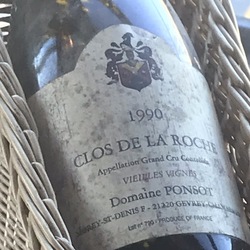
Held up well over the last 28 years! Took a gamble on some birthday wine and it payed off well. Prominent bricking and the cork obviously fell apart, but the wine maintained the rustic, leathery notes of age, with hints of black tea, overripe plum, and some lingering acidic energy, like a ripe strawberry with some dark chocolate. Medium bodied, with some leathery, smoky ash over the dark cherry like fruit, there’s notes of cranberry and strawberry compote still alive in here. The finish lingers for a while, fresh, but not acidic with tannins that only really started to show after a few hours of opening. Grippy, but well integrated. If the measure of a great wine is in its ability to last, this wine has earned the title despite poor storage conditions and lack of faith from its sellers. — a year ago