No Name Road
Quill Wines
Howell Mountain Cabernet Sauvignon 2014

2014 vintage. New release...no really! Held back for a decade until "ready." Medium-heavy body and Cabs don't get much darker in color than this. Tasted more like Spring Mountain or Mount Veeder to me tho as it was missing that Howell Mountain uppercut on the finish. Very nice and the price wasn't as ridiculous as you would expect for a decade-aged, HM Cab project. Producer to keep an eye on for down the road efforts. Heart is in the right place. 8.28.24.
— 2 years ago

Carlisle Winery & Vineyards
Martinelli Road Vineyard Zinfandel 2010

Ripe and round...nice inky dark color and chewy texture. No discernible tannin or alcohol (though listed at 16.3)... the wine is nicely resolved at 10 years. Black fruit, pencil lead, and spice notes. A well grown and produced example of California Zinfandel at ten years. Another example that Zinfandel can age gracefully. — 6 years ago
Domaine A. et P. de Villaine
Bouzeron Aligoté 2013

Made from the other White Burgundy grape, Aligote. Made by probably the most famous name in Burgundy, Aubert de Villaine and his American born wife, Pamela. Aubert is the wine director and proprietor of the Domaine de la Romanee Conti. This is his own personal project. The wine itself:- Mid lemon in colour. Herbs, citrus and a touch of aniseed on the nose. The palate is very citric and mineral with a noticeable saline note. More palate weight than it had a few years ago. Medium minus Acid. Drinking well now and no need to cellar any further. Great winemaking at an affordable price. — 7 years ago
Pike Road Vineyard
Willamette Valley Pinot Noir 2015

John bought - smooth - cherry and hint of vanilla flavors come through. I taste no oaky flavor- John really likes this. — 7 years ago
Wind Gap Wines
Fannucchi-Wood Road Vineyard Trousseau Gris 2013

Château Macquin (Saint Georges)
Saint-Georges-Saint-Émilion Red Bordeaux Blend 2015

Middle of the road Bordeaux. Next time I have a Macquin, I hope it has "Pavie" in the name. — 9 years ago
Château Clos L'Eglise
Côtes de Castillon Red Bordeaux Blend 2005
This is one of the values you buy in futures in excellent vintages (2005 is) and hold it until now & the next 5 yrs for its best. Yet, will drink another 5 yrs. 2005 I believe is the best Bordeaux fruit in nearly three decades I’ve noted.
Also, this one is not to be confused with the same name Chateau that is Pomerol. Think this was around $20 on release.
If you note the Right Bank map I posted, you’ll see the region of Cotes de Castillon is an outlier region just east of St. Emilion. While a lesser region than SE, it still makes some nice wines like this one.
This bottle has been well stored for nearly 20 yrs. Cork like new with next to no wine stain on its side. One of the prettier 91’s I’ve had in memory.
The color is still deep opaque with a lighter glass edge. No brickish tones.
The nose shows ruby, floral, candied; dark currants, blackberries, black cherries, black raspberries, black plum, poached strawberries & raspberry hues,, dark tarriness, black licorice, mid berry cola, steeped tea, coffee, some lead pencil, dry tobacco, dry river stone, dark, rich forest floor w/ dry leaves, light caramel with understated/layered baking spices & soft dark spices, red, dark florals framed in liquid violets.
The tannins are medium, well rounded, plush & velvety. Palate shows a more pronounced ruby quality, floral to just candied; dark currants, blackberries, black cherries, black raspberries, black plum, plum, poached strawberries & raspberry hues, dark tarriness, black licorice, mid berry cola, steeped tea, dry crushed limestone, moist herbs w/ a sage lead, coffee, some lead pencil, dry tobacco, dry river stone, dark, rich forest floor w/ dry leaves, charcoal w/ ash, warm, dark chocolate sliding into milk chocolate, light caramel with understated/layered baking spices-clove, nutmeg, cinnamon, vanillin & soft dark spices, red, dark florals framed in brilliant, liquid violets, perfect acidity, balance for days, softly knitted, mid tension, very good length with an elegant finish that lasts 90 seconds and long sets on gentle, mid spices and beautiful earthiness.
It is an elegant beauty. It’s a gentle, even palate tug of war with the wine & Wagyu Ribcap. 91-92 with the Ribcap. More 92 w/ the steak. — 6 months ago
Domaine du Comte Liger-Belair
Aux Cras Nuits St. Georges 1er Cru Pinot Noir 2016
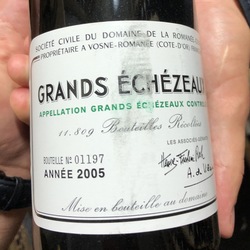
Absolutely stunning. Quite the contrast to the Colombiere, as this is much more serious and structured and the Aux Cras terroir shines through. New oak is more prevalent, of course, but it’s so integrated already and doesn’t get in the way. The nose is incredibly intense and aromas of dark fruit, sweet spice and a wet rock minerality waft from the glass. While this wine is let’s say, more masculine and less sexy than the Colombiere, there is still a seductive Vosne-like perfume that’s so undeniably CLB and lures you in. The palate is powerful and is full of energy, while at the same time remaining focused and seamlessly delineated. To no surprise length is superior to the Colombiere. Totally irresistible now, but boy this will be a knockout down the road. — 5 years ago
Château de La Tour
Clos Vougeot Vieilles Vignes Grand Cru Pinot Noir 2016
No. 3 in the Chambolle Musigny, Vougeot, and Flagey Echezeaux Grand Cru bracket. Tasted blind. Complete, well balanced, indulgent. Some peppery notes....Clos de Vougeot? Minerally, not much ripe fruit here, Hoisin. Those were my off the cuff notes at the time. I have always struggled with the fact that ALL of Clos Vougeot is classified as Grand Cru. If you have ever visited you will know that the plots on the lower flat near the highway are not of GC standard whereas the upper plots near the Chateau over the road from Musigny have no trouble reaching Grand Cru standard. — 7 years ago
Le Vigne di Zamò
No Name Colli Orientali del Friuli Friulano 2017

Eataly January wine club. Very nice. What I wish the all too available Pinot Grigio would taste like. — 8 years ago
Greywacke
Kevin Judd Marlborough Sauvignon Blanc 2015

Greywacke is Kevin Judd's present label, after serving as winemaker at Cloudy Bay and propelling the winery to global acclaim. The name Greywacke refers to a type of river stones found throughout New Zealand. At Greywacke, Judd proves to still be a master of Sauvignon Blanc, and his "Wild Sauvignon" is no excpetion. This is the apex of what oak-fermented New Zealand Sauvignon Blanc can be - one doesn’t lose the untethered audacity of its varietal character. Tactile and lengthy, it tastes of sesame seeds, grapefruit, thyme, parsley, green apple skin, and sea salt. Palate coating, but still feral and daring. — 8 years ago
Rene Rostaing
Ampodium Côte-Rôtie Syrah 2010
2010 was a very good vintage in Rhône. Rostaing is a well know producer with people that know and drink Northern Rhône wines, not so much with others that do not. The Ampodium is the entry level into Rene & Pierre Rostaing wines. It is a blend of 13 vineyards in Northern Rhône. They are simply one of the very best producers in the region. I spent an afternoon with Rene & his son Pierre tasting in the their cellar and in their La Landonne vineyard as shown in the photos. The 2010 is drinking beautifully with many good years ahead. On the nose; ripe & slightly stewed/baked fruits of; blackberries, dark cherries, strawberries, creamy raspberries, stewed plum, black raspberries, cherries, steeped fruit tea, dry crushed rocks, iron pan, some white & black pepper, bacon fat, grilled savory meats, pork, black licorice, black cherry cola, decayed & fresh red florals with violets. The body is round and medium full. The tannins round, still a little chewy & around 55% resolved. The length, texture, tension and balance are in near perfect harmony. The fruits are; round, ruby & ripe; slightly stewed/baked fruits of; blackberries, dark cherries, strawberries, creamy raspberries, stewed plum, black raspberries & cherries. Steeped fruit tea, dry crushed rocks, chalky minerals, iron pan, coffee grounds, spice, some baking spices w/hints of vanilla, white & black pepper, drying blood, dry herbs/bay leaf, dry stems, moderate levels of bacon fat & pork, grilled savory meats, black licorice, black cherry cola, decayed & fresh red florals with fresh violets for days. The acidly is round and dripping. The long finish is plush, velvety delicious and lasts & lasts. In good vintages, I would put this in blind with the best of of the best new world wines from any vintage that many love; SQN, Booker, Saxum, Alban, Cayuse, Horsepower etc.. I’d bet most of you would pick it over these producers that cost much more $$$. It’s simply one of the best pound for pound wines/producers for this varietal. Especially, for the $$$. Wow, what a wine for the $. $55 upon release. Photos of; Winemaker Pierre Rostaing and our group in their La Landonne vineyard, the small sign that barely identifies their Estate, an example of the Quartz mineral that runs throughout their La Landonne vineyard and the view back onto the river from the top of the very steep La Landonne Vineyard. Producer notes and history...Rene Rostaing produced their first wine in 1971. However, it took almost three decades before wine became a full time occupation for Rene Rostaing. Domaine Rene Rostaing came about through marriage. The wife of Rene Rostaing was the daughter of the famed Cote Rotie grower, Albert Dervieux, and the niece of Marius Gentaz-Dervieux who gave Christine the vineyard land that became the Northern Rhone estate for Rene Rostaing. Through inheritance from Albert Dervieux Thaize (his father-in-law) who retired in 1990, and from Marius Gentaz Dervieux, his uncle, Rene Rostaing expanded his holdings, giving him some of the best terroir in Cote Rotie. The new vineyard land was basically 3 small parcels in the La Landonne, Cote Brune and Vialliere lieux-dits. This initial expansion from his initial tiny parcel, allowed Rene Rostaing to change careers and become a full time vigneron. Since 2007, the estate has managed by Pierre Rostaing, (son) of Rene Rostaing. Currently Rene Rostaing owns 7.5 hectares of vines that is spread out among 20 different parcels located in 14 locations. Perhaps the most celebrated vines of Rene Rostaing are the 1.6 hectares of vines they own in the La Landonne vineyard (photo). On La Landonne, the vines are more than 60 years old. Some vines are even close to 100 years of age! Those are his largest holdings. The smallest vineyards of Rene Rostaing are located on Cote Blonde. Rene Rostaing also has vines planted in; Fonjean, La Vialliere, Le Plomb, Bouchare, Leyat, La Roche and La Tupin. Their oldest vines are more than 70 years old and are used for Rene Rostaing Cote Blonde. The majority of those plantings are on the steep hillsides with mica, schist and rocky soils. 25% of those vines are closer to the bottom of the slopes and on the flats. Rene Rostaing remains a traditional Cote Rotie producer who is not among the last to harvest. His wines are aged using very little new, French oak barrels. On average, Rene Rostaing Cote Rotie are aged in about 10% new French oak barrels. Rene Rostaing produces 4 different Cote Rotie wines. Rene Rostaing Ampodium, which was previously known as Rostaing Cuvee Classique, is a blend of 13 sections of different vineyards, but it does not include their best holdings on La Landonne or Cote Blonde. The fruit for Rene Rostaing Ampodium has at least 40% or more of the stems removed and run between 12-13.5% abv. The wine is usually made from 100% Syrah and is aged in an average of 15% to 25% new, French oak barrels. The amount of new oak can be less, depending on the character of the vintage. About 1,750 cases are produced each year. The wine is no longer called Cuvee Classique, the name was changed to Rene Rostaing Ampodium with the 2009 vintage. Rene Rostaing La Landonne comes from a terroir consisting of sands with iron oxide and traces of quartz. This wine is always produced from 100% Syrah. The grapes are partially destemmed, with about 10% to 20% of the stems removed, depending on the vintage. There are vintages when no destemming takes place. The remainder of the grapes are whole bunch fermented in stainless steel vats. Rene Rostaing is not a believer of using too much new oak for the aging, which on average uses 10% new, French oak barrels and the remainder of the harvest is aged in demi-muids (600 liter) and French oak barrels. This wine is like most wines from La Landonne, masculine and meaty in character, requiring at least a decade to soften and develop. On average, Rene Rostaing La Landonne produces less than 600 cases depending on what the vintage delivers. Rene Rostaing Cote Blonde is perhaps his best. It’s produced from a blend of 95% Syrah and 5% Viognier. The grapes are co-fermented. The vineyards is planted in the region call Arzel. Arzel is a poor, mineral laden soil with deposits of Silex and Mica on a steep hillside. The vines are more than 50 years of age. The grapes are partially destemmed…35% to 50% of the stems are removed. The remainder of the grapes are whole bunch fermented in stainless steel vats.
The remainder of the harvest is aged in demi-muids. This one is the hardest to find and most collectible of all their wines. In fact, they only produce close to an average of 350 cases of Cote Rotie in most vintages. Rene Rostaing Cote Brune made its debut with the 2013 vintage. The vines were once part of the holdings of Marius Gentaz, which eventually passed to Rene Rostaing. Rostaing replanted those vines in 2000. Made from 100% Syrah. — 9 years ago


Paul T, Missing My Beautiful Wife 24/7
Is this considered cold climate or warm climate?
Adobe Road
Sangiacomo Vineyards Chardonnay 2022
Good fruit with very nice spice from the barrel. No malolactic notes which adds to the overall positive impression. — a year ago
Xanadu Wines
Stevens Road Margaret River Chardonnay 2021

Delicious. No malo. Step up from the entry level. — 3 years ago
Balletto Vineyards
Burnside Road Vineyard Pinot Noir 2018

Balletto Pinot showdown no. 1
Best in the mouth.
Light ruby-garnet. Visually appears to have age beyond it's 4 years to me.
Not a great nose- overripe fruit, some blue notes, oaky spice- maybe has seen new American oak?
Mouth: wow, great full++ mouth feel, a really nice roundness here, unexpected.
This wine is ready to drink right now! — 4 years ago
Felton Road
Bannockburn Chardonnay 2017

Clear taste. Balanced with acidity, fruitiness, citrus but not too much. Herby 2017 @1170(1800), Eva - No, 200314-200317 — 7 years ago
Williams Selyem
Eastside Road Neighbors Pinot Noir 2015
Drinking 15 vintage. Love the 13 vintage better but the nose on this wine is more robust and more cherry. Very smooth and little to no finish. Delicious! — 7 years ago
Château Cantenac
St. Émilion Grand Cru Red Bordeaux Blend 2014

Back in the US so here is my last review from my trip to 🇫🇷. Found on the side of the road at an unassuming low key Chateaux/tasting room close to Saint Emilion no reservations needed - the wines were pretty good - I liked them all but the basic 2014 Cantenac was really well done. 13.5% a ton of acid which already precipitated out. An enjoyable classic Bordeaux. Mostly dark berry flavors well done. — 8 years ago
Yannick Amirault
Le Grand Clos Bourgueil Cabernet Franc 2010

Vintage 2010 - there are multiple reasons why I love #bourgueil let me explain. When I just discovered wine as a real passion - at the age of 18 - I adored the raspberry smell no other wine offered so generous. I like the name: Bourgueil is by far the most beautiful AOC name. My wife and I fell in love with the great dishes of Madame Debacker and the #Loire region on our honeymoon. This #cabernetfranc is deep black in the glass. It has character. Even at this age the wine shows a bit harshness, and an austerity that is found in Bordeaux often. But the raspberry and cherry smell reminds me of Cru de Beaujolais. It has also flint and mineral expression in smell, hints of leather, tobacco, clove. On the tongue it has a velvety structure. Bourgueil can be complex and frivolous at the same time. / Partnered it with Bavette from bbq and cauliflower mousse. — 8 years ago

KA
Kiki on the River Miami — 4 months ago