10 Barrel Brewing Co.
Mascota Vineyards
Eccentric Bourbon Barrel Aged for 10 months Malbec
This 2024 Malbec was great. Would definitely purchase again. — 8 months ago
Château Eugenie
Cuvée Reservée De l'Aieul Cahors Malbec 2014


Vintage 2014 | half a year ago I wrote: this needs more time. 90 Malbec 10 Tannat 16 m barrel aging 1/3 new | Today I am very happy: explosion of cherries in smell and a velvety taste. Very comforting. Paired with comté, fromage de truffle and parmesan | second day with venison steak — 3 years ago
Hatzidakis Winery
Santorini Vinsanto 2004

Hundred Acre Vineyard
Deep Time Cabernet Sauvignon

Maybe I need to place parameters on which bottles are ok to pick from for a blind taste test! It actually was a great experience. To be honest, Deep Time is not my cup of tea. I don’t know how much everyone knows about Deep Time, but it is basically an extended barrel aging program, 38-40 months I believe. I just think it is too much oak. As a 2006 there is still so much oak, and it is not meshing well with the naturally oxidized/aged flavors. Blinded, I said it was a high-end Napa Cab-dominant blend that was probably older than it tastes at first ( I said 2008 or 10-14 years old). Overall it isn’t my favorite style because of a brooding and almost sour character. After I was unblinded I feel like I was tasting a saturated and old oak flavor. In summary, extra oak plus 15.5% alcohol plus more than a decade of aging was not in a great place for my palate. — 6 years ago

Hopefully we can get together soon
Château Latour
Les Forts de Latour Pauillac Red Bordeaux Blend 2009
I love this second wine of Latour and the 2009 is outstanding.
The nose shows, brightly floral, ripe and slightly stewed fruits of; dark cherries, blackberries, strawberries, black raspberries & haunting blueberries on the high nose. Beautiful, soft, dark spices, leather, graphite, light tobacco, red licorice, dry brush, limestone, dart crushed rocks, anise to black licorice, coffee, steeped tea, vanilla, clove, nutmeg, cinnamon stick with brightly floral; red, dark, blue flowers with violets & hints of lavender.
The body is just full, round, silky and shows the astounding beauty & elegance of 2009. The structure, tension, length and balance are nicely knitted together. Brightly floral, ripe and slightly stewed fruits of; dark cherries, blackberries, strawberries, black raspberries & haunting blueberries. Beautiful, soft, dark spices, leather, graphite, light tobacco, red licorice, dry brush, limestone, dart crushed rocks, rich, dark, moist earth, anise to black licorice, coffee, steeped tea, herbal notes, eucalyptus, saline, vanilla, clove, nutmeg, cinnamon stick with brightly floral; red, dark, blue flowers with violets & hints of lavender. The acidity is dead on. The finish dances on the palate. It is perfectly balanced and elegant as hell. Just misses 9.5. If I had a whole bottle, it would get elevated. This wine in another 10 plus years to 35 years of age will stun.
Photos of; Chateau Latour, stainless tanks, library room that I would love to raid and barrel room. — 7 years ago


La Jota Vineyard Co.
Howell Mountain Cabernet Franc 2019

Inky in color with a purplish rim.
Pretty nose with lots of black fruits, chocolates and cedar notes.
Full-bodied with medium plus acidity and long legs.
Dry on the palate with black currants, plums, cooked cherries, oak, chocolates, vanilla, licorice, spices, tobacco, herbs, earth and black pepper.
Tangy finish with fine grained tannins and pomegranates.
This is a delicious Cabernet Franc from Howell Mountain in Napa Valley. Rich and extracted, elegant and fruit forward. Nicely balanced with nice complexity, and a soft mouthfeel.
Still young, and needs a few more years in the bottle to mature properly, but already very approachable. Will continue to age nicely in the next 10 years.
Wine Enthusiasts 95 points. Robert Parker 93 points.
Good by itself as a sipping wine, or with food. Will pair nicely with Lamb dishes.
100% Cabernet Franc grapes were aged in (67% new) French Oak barrels for 21 months. Unfiltered and unfined.
14.1% alcohol by volume.
92 points.
$135. — 2 months ago
Enderle & Moll
Muschelkalk Pinot Noir 2018

Better than any Red Burgh I ever had. Challenging and not for the faint of heart: Upon opening rough and close to undrinkable with a good amount of volatile acid. That blows off. 20 min in, and then, this shows what it is made of. Importantly- drinking window upon opening - is about 30 min then it starts to fall off!!!!!! Still super tannic needs 5 more years - Anyways an incredible potpourri of flavors - a genius at work - Sven Enderle - the guy takes risk no one else would - ultra dark cherry, mouth puckering tannins, 🇮🇩 Indonesian spices, clove, cinnamon and then Italian - Oregano). At the same time this acidic tension - Mexican lime! ——/Touch bitter, black tea, elderberry. Absolutely world class 9.8 should be a 10 in ~ 2-5 years. Pinot does not get better then this! High 14.1% for this producer. Quite dark and extracted the 2018. A unicorn and often they made just one barrel - 300 bottles. The Pinot clones who knows what they are > 60 years old gnarled and full of moss. I had the privilege to visit them every other year. Sadly they closed shop. — 2 months ago
La Jota Vineyard Co.
Howell Mountain Merlot 2015
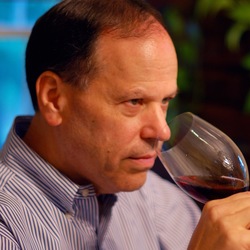
Blend of 90% Merlot and 10% Petit Verdot, deep Ruby with aromas of ripe dark fruits, spice and floral notes. On the palate flavors of blackberry, plums and black cherry with toasty oak, cacao and espresso. Fine soft tannins, long finish ending with fruit, oak and spice. Still has room to age, but nice now! — 4 years ago
Chalk Hill
Sonoma Coast Chardonnay 2018
A real solid $20 Chard, Barrel aged 10 months sur lie! Medium lemon color with aromas of stone and citrus fruits with notes of warm baking spice. On the palate ripe apple and lemon flavors with vanilla and nutty toasty oak. Well balanced on medium+ finish ending, a bit buttery with slight oak and mineral notes. A favorite!! — 5 years ago
Amador Whiskey Co.
Napa Valley Double Barrel Kentucky Bourbon Whiskey
One of my new favorite whiskeys. Absolutely phenomenal, smooth, bold flavor. — 6 years ago
Kobalt
Napa Valley Cabernet Sauvignon 2010
Social distancing FaceTime dinner & wine with friends. It has been too long since we have gotten together. I did not take real-time notes as I normally do.
First, I have to say I am not the biggest fan of how the 2010 Napa vintage turned out over time. Not to say there weren’t some nice to very good wines made. For me, most of them lack depth & character over Napa’s better vintages.
Kolbalt’s wines from Coombsville are dark, very full & brooding. They pick late to the point of the skins just starting to shrivel. They are concentrated and when young show dark, rounded, sweet, tarry, thick tannins. But given their late fruit picking, they aren’t overly sweet or show hot alcohol from their elevated Brix’s level.
While the 2010 had softened, it was elegant & seductive on the palate but, it just lacked the complexity I have had in their better vintages. 2013 will be one for the ages after 10 years in bottle.
The 2010 showed a nice broad spectrum of fruit from dark, purple & blue. Nice round, mld dark spice, well balanced & layered baking spices, dark rich earth, limestone minerals, very good & round acidity. The finish was good showing nice, balance, texture with ripe, rounded fruits and persisted with mid dark spice without heat on the long set.
Photos of; Kolbalt’s Coombsville vineyard where they growth both Cabernet & a tiny amount of Sauvignon Blanc. Their SB is refreshing and very tropical in style. Cabernet fruit near harvest and our tasting back at the house with co-founder Kevin Carriker. — 7 years ago
Bedrock Wine Co.
North Coast Syrah 2016

The fruit is starting to mellow just a little bit but these still benefit from an hour of air. Rich dark fruit, with lots of syrah character. A little black pepper but not overwhelming and a little green pepper too. Drinks well now with more improvement short term and should be in its prime for another 8-10 — 8 years ago
Château Clerc Milon
Pauillac Red Bordeaux Blend 2005
This is well beyond critical reviews young.
Sofia & I became friends with Jean D’Anjoy (photo to right). Winemaker who now runs all the Rothschild properties. He was the Assistant Winemaker at Opus One for 10 yrs. He had many offers to be a Napa Winemaker but refused. Had he, he would have been demeeded a Napa Winemaker when he wanted to always go back to Bordeaux as a Winemaker. Opus was fine as it is 1/2 French owed. He later became the the Clerc Milon Winemaker in 09. What a first vintage. He simultaneously built the new facilities at Clerc Milon. He is also perhaps the best & kindest human being I’ve ever met.
He arranged for Sofia & I to pick the Mouton Merlot and work all phases of the 2012 Clark Milon vintage. So, you might wanna not buy the 2012 vintage of Mouton & Clerc. 😂 He also arranged for us to sit at the Baroness’s table for the harvest luncheon where they poured the last of the filtered bottom of the barrels of 82 Mouton. I asked Sofia to pinch me. The Baroness sadly died two years later.
The nose is sweet and a touch sour; blackberries & black raspberries. Floral & slightly candied; dark and light cherries, juicy strawberries, raspberries and some circling baked rhubarb. Understated new oak barrel powder, beautiful baking spices-clove, nutmeg, cinnamon and vanilla, dry leaves and twig, baking powder, fresh and dry herbs, lead pencil shavings, limestone, dark soils, dry pebbles, red, and dark florals set in liquid violets.
The palate shows medium plus well rounded, softened, resolved tannins. The fruit is ripe and juicy. Blackberries & black raspberries. Floral & slightly candied; dark and light cherries, juicy strawberries, raspberries and some circling baked rhubarb. Understated new oak barrel powder, beautiful baking spices-clove, nutmeg, cinnamon and vanilla, dry leaves and twig, baking powder, mid, dark spices with a shade of heat, fresh and dry herbs, lead pencil shavings, moist to dry tobacco, used leather, limestone, dark soils, dry pebbles, red, and dark florals set in liquid violets, perfect acidity and a grand elegant, well balanced, integrated finish that lasts 90 seconds and lands on spice & earth.
An elegant beauty if I ever had one. Has another 5-7 yr ahead depending on storage.
Photos of; the new facilities at Clerc Milon, Jean D’Anjoy and their vineyards, barrel room and tasting/entertaining lounge.
Delectable & IOS 27 isn’t a good fit today. — 2 months ago
Badet Clément & Co.
Révélation Vin de Pays d'Oc Chardonnay 2023

This sub $10 Trader Joe’s treasure really shines. The butter is restrained and balanced, also has a bright acidity. Notes of citrus on the nose and caramel, vanilla and butterscotch on the palate. Great delightful wine to pair with spicy food. — a year ago
C.V.N.E. (Compañía Vinícola del Norte de España)
Imperial Gran Reserva Rioja Tempranillo Blend 2012
Deep Ruby, aromas of red and black fruits with pepper spice and oak, a classical blend of 85% Tempranillo, 10% Graciano and 5% Mazuelo, barrel aged for 24 months. On the palate flavors of black cherry and currants with spice, espresso, vanilla & toasty oak tones. Soft full ripe tannins, lively acidity on a long finish ending with fruit, spice and an earthy mineral character. Nice! — 4 years ago
The Old Bushmills Distillery Co.
Aged 10 Years Triple Distilled Single Malt Irish Whiskey

Nose of cotton candy, sweet chocolate, peat, and lemon. Much stronger taste of peat and charred wood, with a softer lemon sweetness behind. Finish of bitter chocolate and coffee. — 5 years ago
Château Belle-Vue
Haut-Médoc Red Bordeaux Blend 2000
We had the 2000 with the Allen Brothers Ribcap’s. Might have been the most tender cut of meat we had. Even more tender than their Bone-in Fillets. Allen Brothers is currently selling to consumers during Covid-19 as most restaurants are shut or barely open. Order online before the go back to restaurant only sales. You’ll be glad you did. You can see on their site what revered steakhouses they sell their beef etc. Cooked them in the Green Egg. 👌
Perhaps the first 2000 that I’ve opened that was truly ready. Yet, it will improve for another 5-7 years and hold for another 5-10 years properly stored.
The tannins were round and supple...like velvet. Good balance fruit & earth. The structure, tension, length and balance just hit a good stride. Dark, rich, but, muted fruits, dark chocolate, mocha powder, touch of caramel, nicely layer baking spices, dark rich earth, clay, stone, fresh, soft tobacco notes, saddle-wood, soft graphite notes with fresh & withering dark flowers. The acidity nice & round...definitely shows the strength of the vintage. The finish, well balanced-knitted, plush, velvety, flat out elegant & smooth.
Photos of, Chateau Belle-Vue, living area shot of inside the Chateau, perfect fruit ready for harvest and their barrel room. — 6 years ago


Château Brane-Cantenac
Grand Cru Classé en 1855 Margaux Red Bordeaux Blend 2005
I have a six-pack of this 05. I thought after 10 years in bottle, it would be interesting to check in on its evolution. While tasty, I’ll wait another 8-10 to open another. Even after 2-3 hours in the decanter, it’s still a very young adolescent. On the nose, slightly sour blackberries & dark cherries, dark currants, baked black plum, haunting blue fruits, anise, whiff of spice, steeped tea, dry stones, dry crushed rocks with dry top soil, caramel, vanilla with fresh & dry red florals. The body is thick & full. Tannins are starting to round out. It’s velvety on the palate. The fruits are; bright, fresh & ripe and really show the greatness of the 05 vintage. Dark currants, blackberries, dark cherries, baked black plum, haunting blue fruits, baked strawberries, cherries, raspberries on the long set, dark spice, clay & loamy dry top soil with crushed rocks, dry stones, cigar with ash, graphite, dry stems, slight herbaceous character, mint, used leather, clove, caramel, vanilla, fresh & dry red florals with violets. The round acidity is about perfect. The structure and length are still strong. The balance is in harmony. As for the long finish, it’s lush, ruby, rich and well polished. Photos of; Chateau Brane Cantenac, large wood vats, Henri Lurton and Estate vines. Producer notes and history...Chateau Brane Cantenac began in the early 17th century. At the time, the estate was known as Domaine Guilhem Hosten. Even that far back, wine was produced from the property. In fact, the wine was so highly regarded it was one of the more expensive wines in Bordeaux. It sold for almost as much money as Brane Mouton. This is interesting because of who went on to buy the vineyard in the 1800’s. The Baron of Brane, also known as “Napoleon of the Vineyards”, purchased the Chateau in 1833. At the time of the sale, the estate was called Chateau Gorce-Guy. To get the funds needed to purchase the Margaux vineyard, the Baron sold what is now called Mouton Rothschild, which was at the time of the sale, known as Chateau Brane-Mouton. Not such a good move with hundreds of years in hindsight! In 1838, the Baron renamed property taking his name and the name of the sector where the vineyards were located and called it Chateau Brane Cantenac. The Chateau later passed to the Roy family, who were well-known in the Margaux appellation in those days, as they owned Chateau d’issan. Moving ahead to 1920, the Societe des Grands Crus de France, a group of merchants and growers that owned several chateaux located in the Medoc including; Chateau Margaux, Chateau Giscours, and Chateau Lagrange in St. Julien, purchased Chateau Brane Cantenac. Five years later, M. Recapet and his son-in-law, François Lurton, took over Brane Cantenac along with Chateau Margaux. Lucien Lurton (the son of François Lurton) inherited Brane Cantenac in 1956. Today, the estate is still in the hands of the Lurton family. Brane Cantenac is owned and run by Henri Lurton. After being given the responsibility of managing Brane Cantenac, it was under the direction of Henri Lurton that large portions of the vineyard were replanted. Vine densities were increased, the drainage systems were improved and the plantings were also, slowly changed. The vineyard of Brane Cantenac is planted to 55% Cabernet Sauvignon, 40% Merlot, 4.5% Cabernet Franc and .5% Carmenere. Carmenere was used for the first time in the 2011 vintage. The only other Chateau I know that still uses Carmenere is Clerc Milon. The 75 hectare Left Bank vineyard of Brane Cantenac is essentially unchanged since it earned Second Growth status in the 1855 Classification. At least that is the case with the 45 hectares used to produce the Grand Vin of Brane Cantenac. Those 45 hectares are planted surrounding the Chateau. Those vines are located just in front of the Cantenac plateau and are the best terroir that Brane Cantenac owns. They have other parcels, which are further inland and much of those grapes are placed into their second wine, Le Baron de Brane. Those additional hectares can be divided into 3 main sections. Behind the Chateau, they have 15 hectares of vines on gravel and sand, 10 hectares across the road with sand, gravel and iron and a 13 hectare parcel with gravel called Notton, which is used for their second wine. The vineyard is planted to a vine density that ranges from 6,666 vines per hectare on the plateau and up to 8,000 vines per hectare for the vines located behind chateau, in their sandier soils. The higher levels of vine density are always found in the newer plantings. The terroir of Brane Cantenac consists of deep gravel, sand and clay soil. Experiments in the vineyards are currently looking at becoming more organic in their vineyard management. Today, more than 25% of Brane Cantenac is farmed using organic farming techniques. It is expected that over time, the amount of hectares farmed with organic methods will be increased. Brane Cantenac has gone through 2 relatively recent modernization’s in 1999, when they added began adding the first of their smaller vats to allow for parcel by parcel vinification and then again in 2015 when they completed a much more complete renovation of their cellars and vat rooms. While Brane Cantenac is a traditional producer, they are no stranger to technology as they were one of the first estates to embrace optical grape sorting machines. In very wet vintages, they can also use reverse osmosis. To produce the wine of Chateau Brane Cantenac, the wine is vinified in a combination of temperature controlled, traditional, 22 oak vats, 18 concrete tanks and 20 stainless steel vats that vary in size from 40 hectoliters all the way up to 200 hectoliters, which allows for parcel by parcel vinification. 40% of the fermentation takes place in the oak vats. The oldest vines are vinified in vats that are selected to allow for separate parcel by parcel vinification. The younger vines are vinified more often together in the same vats. However, the Carmenere is entirely micro-vinified, meaning that those grapes were completely vinified in barrel, using micro-vinification techniques. This can also happen because the amount of grapes produced is so small. Some vats can be co-inoculated, meaning they go through alcoholic fermentation and malolactic fermentation simultaneously. At Chateau Brane Cantenac, malolactic fermentation takes place in a combination of French oak tanks and barrels. The wine of Brane Cantenac is aged in an average of 60% new, French oak barrels for 18 months before bottling. The initial 2 months of aging is done with the wine on its lees, which adds more depth to the wine. There second wine is Le Baron de Brane. Le Baron de Brane is not new. In fact, previously, the second wine went under the name of Chateau Notton, which took its name from one of the main parcels where the grapes were planted. During the late 1950’s and into the 1960’s, having a second wine was important as the estate declassified 3 vintages, due to extremely poor, weather conditions in 1956, 1960 and 1963. Production of Chateau Brane Cantenac is about 11,000 cases per year. — 9 years ago

"Odedi"
Dark ruby in color with a wide reddish rim.
Fruity nose and medium plus in body with medium acidity.
Dry on the palate with nice complexity.
Showing black cherries, black plums, black currants, light oak, mediterranean spices, light earth, herbs and peppercorn.
Long finish with fine grained tannins and tangy cherries.
This is a delicious Cabernet Sauvignon based Bordeaux blend from Napa Valley. Fruit forward and complex. Elegant and nicely balanced, spicy and entertaining. Feel like a left bank Bordeaux with a touch of Napa.
Still young, but already enjoyable even by itself. Needs a few years in the bottle to mature properly, and will continue to age nicely in the next 15 years. Has good potential to become a 94+ point wine.
Wine Spectator 90 points. Robert Parker 91 points. Wine Enthusiasts 94 points.
A good sipping wine that will also pair nicely with a food.
A blend of 75% Cabernet Sauvignon, 10% Merlot, 6% Cabernet Franc, 5% Malbec and 4% Petit Verdot. Aged for 12 months in (30% new) French oak barrels.
14.5% alcohol by volume.
92 points.
$40. — 20 days ago