Halby Marketing
Produttori del Barbaresco
Barbaresco Nebbiolo 2012


Blue Ventures Wine Marketing
Blau Cariñena Blend

Considero un Montsant molt ben equilibrat a boca i a nas — 5 years ago
Nicholson Jones
St. Helena Sauvignon Blanc 2016
One of my favorite small production wine, 300 cases. Cal Nicholson spent his youth in So. CA & after a long marketing career he hung up his spurs to follow his 2 real interests in life – surfing & wine making. Jones is the maiden name of Cal’s wife Pam. A wonderful wine. Aromas of lemon citrus with herb, stone & tropical fruits. Palate, peach, Granny Smith apple & ripe melon flavors with lively citrus zest wrapped in lbalanced acidity. Lingering finish ending with mineral citrus finish. Consistent! Nice! — 7 years ago

Château Lafite Rothschild
Carruades de Lafite Pauillac Red Bordeaux Blend 2003
On the nose, ripe; blackberries, sweet & sour dark cherries, cooked cherries & strawberries & hues of blueberries. Black tea, cola, soft baking spices; vanilla, light clove & cinnamon. Crushed rocks, stones, limestone, turned, moist black earth, tobacco leaf, saddle-wood, soft leather, dry & fresh dark red florals.
The body is medium edging toward full. The tannins pretty well resolved. The ripe fruits show the hot, ripe vintage. Blackberries, sweet & sour dark cherries, cooked cherries & strawberries & hues of blueberries black tea, cola, soft baking spices; vanilla, light clove & cinnamon. Crushed rocks, stones, limestone, tobacco with ash, some graphite, soft medium dark spice, turned, forest floor, powdery but edgy minerals, saddle-wood, soft leather, dry & fresh dark red florals with some violets on the finish.
This showed better with Ribeye. The Ribeye brought out a fuller, richer wine with even more complexity. 9.35-9.4 with the Ribeye. It just missed 9.2 on its own. It’s big brother the 03 “Lafite” is 💯 point Parker wine.
Photos of; Chateau Lafite, their oak vat fermenters, Estate wine and their magnificent barrel room.
Interesting history and producers notes...Lafite Rothschild has a long and interesting history dating back to 1234, even though the property was not in the Bordeaux wine business at that time.
It is has been largely believed that vines were already planted on their terroir. The owner of the estate at the time, Gombaud de Lafite left his mark, his name. Almost 1,000 years after he owned it, the Chateau is still named after him! The vines were probably in existence at Lafite for over a century, it was not until around 1680, the majority of vineyards of what we know of as Lafite Rothschild today were created. This is because on the 1680 estate manifest, there are six mentions of their Bordeaux vineyards. Jacques de Segur, earns credit for cultivating the vineyard as I wrote in my Colon Segur post last weekend. In 1695, Alexandre de Segur married Marie-Therese de Clauzel, heiress to Chateau Latour. So to dovetail that write up, within a generation, the Segur family married into two of the greatest Bordeaux vineyards, Chateau Lafite and Chateau Latour! When their son, Nicolas-Alexandre passed away, Chateau Lafite and Chateau Latour were separated.
In 1797, Chateau Lafite was sold again. In the deed of sale, Chateau Lafite was described as a Premier Cru of Medoc. This is one of the earliest mentions of what we know of today as Lafite Rothschild producing wines of what would later be classified as an 1855 First Growth.
At that time, of Lafite were managed by the Goudal family. The Goudal family were wine historians and were able to read accurate records and details of the viticulture and marketing plans for Chateau Lafite in the estates formative years. The Goudal family gets the credit for creating the cellar and saving many of the oldest bottles that remain in the cold, dark cellars, including their oldest bottle, the 1797 Lafite!
The start of the famous Rothschild family begins in 1744, with the birth of Amschel Meyer. Amschel Meyer began creating his fortune while working as a merchant at “Zum Roten Schild,” which eventually became the family name of Rothschild.
In 1798 his sons were sent to various cities to create their fortunes. Needless to say, his sons all prospered as did their children in turn. This eventually led to them wanting to own a Chateau in Bordeaux. So in 1853, Baron Nathaniel de Rothschild, an English member of the Rothschild family, purchased Chateau Brane-Mouton. As was the custom of the day, the new owner renamed it using his name and Chateau Mouton Rothschild was born.
This was followed in 1868, when James Rothschild, another member of the family purchased Chateau Lafite, which was now a coveted First Growth.
On 8 August, 1868, Baron James d’Rothschild purchased Chateau Lafite, which was sold at a public auction in Paris. It’s assumed, he bought the property for family competitive reasons looking to one up his brother, the owner of Mouton Rothschild. At that time, Mouton Rothschild was only a Second Growth at the time. But, that does not paint the entire picture. The 1855 Classification had not taken on the importance associated with it the we see it today. Plus, buying Lafite was a reasonable investment as the vineyard sold for about 8 times its earning potential.
The actual Chateau is one of the older structures in Bordeaux, as part of the building dates back to the later part of the 16th century. In 1868, the vineyard took up 135 hectares, of which 74 hectares were cultivated with vines. Production was much smaller in those days than it is today as it was between 4,000 and 5,000 cases.
Just three months after the purchase, Baron James d’Rothschild passed away and Chateau Lafite Rothschild became the joint property of his three sons; Alphonse Rothschild, Gustave Rothschild & Edmond Rothschild. Since 1868, Chateau Lafite Rothschild has remained in the hands of the of Rothschild family. The new owners renamed the estate Chateau Lafite Rothschild.
Jumping ahead to the modern age, in 1962, the Rothschild family added to their holdings when they purchased Chateau Duhart-Milon, a Fourth Growth vineyard also located in Pauillac. It was owned by the Casteja family for more than a century, Chateau Duhart Milon suffered from neglect and was in a awful condition. By the time Duhart Milon was obtained by the Rothschild family, the vineyard was down to only 17 hectare which required extensive renovations.
Baron Eric Rothschild, nephew of Baron Elie Rothschild, took over the management of Lafite Rothschild in 1974. Baron Eric Rothschild was part of the fifth Rothschild generation to inherit Chateau Lafite Rothschild. In 1984, the Rothschild family added to their holdings in Bordeaux with the purchase of Chateau Rieussec in Sauternes.
1987 was a difficult vintage, but because that was the year Lafite celebrated the inauguration of their wine new cellar, they had a lot to be excited about.
The new cellars were built under the supervision of Catalan architect Ricartdo Bofill, is both underground and circular, with a vault supported by 16 columns, giving the structure a majestic architectural style. The cellar holds 2,200 barrels, which is about 55,000 cases of wine. The construction took two years to finish and was completed in 1988.
Domaines Baron Rothschild became one of the first Bordeaux properties to invest in South America when they purchased Vina Los Vascos from a Chilean family. The owners of Lafite Rothschild continued expanding their holdings with the purchase of Chateau lEvangile in Pomerol from the Ducasse family, who owned the property for almost 100 years.
The wine making at Chateau Lafite Rothschild was managed by Charles Chevallier, who began his position in 1994. Charles Chevallier was replaced by Eric Kohler in January 2016. 2017 saw another change at the estate when Jean Guillaume Prats replaced Christopher Salin as the President of Domaines Baron Rothschild.
Perhaps, it’s the most refined of the First Growth. The wine, like all First Growth’s takes decades to mature. It has remarkable staying powers. Bottles of 1870 Lafite Rothschild discovered in the Glamis castle remain profound at more than 140 years of age! It is consider by many Master Sommeliers to be the best wine in the world.
Chateau Lafite Rothschild is one of the earliest major Bordeaux estates to bottle their own wine. In 1890, they bottled a large portion of the wine and again in 1906. Part of the estate bottling was due to requests from Negociants who were willing to pay more for Chateau bottled wines. Also, bottling was primarily done to combat piracy. At the time, it was known that merchants in some countries, like Russia were bottling cheap wine and placing labels from Lafite Rothschild on the bottles. The Koch’s famous Jefferson bottles were not the first attempt at counterfeiting.
Prior to 1996, some would say the property had its share of ups and downs. The 1960’s and 1970’s were not great for Chateau Lafite Rothschild. But since 1996, Lafite Rothschild has been producing some of the best wine in their history!
Sadly, only the wealthy can afford to purchase it. Price aside, there is no denying the level of quality. In 2003 Lafite Rothschild produced a wine that is possibly unequaled by the estate at any time in their long history. Hence, my purchase of their 03 second wine. 2009, 2010 and 2016 are not far behind.
Starting in about 2008, Lafite Rothschild became the most collectible wine from Bordeaux. Prices exploded due to demand from China as Chinese businessmen bought them as gifts or bribes depending on you look at it.
The reason this started was Lafite Rothschild paid for product placement on the number one rated Chinese soap opera on television. Characters in that show were pictured enjoying life with Lafite Rothschild and since then demand went through the roof as did priced.
However, Issac Newton had it right when he declared “What goes up, must come down.” Prices for Lafite Rothschild plummeted after 2011. By the difficult 2013, prices were finally starting to hold firm, but many of the vintages that were setting price records on a daily basis had lost close to 50% of their value.
Starting with the 2012 vintage, Chateau Lafite Rothschild began instituting anti-counterfeiting measures. From 2012 forward, to help fight, rampant counterfeiting, the estate places a seal of authenticity on the capsules of both Lafite Rothschild and Carruades de Lafite. The seal features a unique, numbered code that can be checked on their website, to verify if the wine is real.
The 112 hectare vineyard of Chateau Lafite Rothschild is planted to 70% Cabernet Sauvignon, 25% Merlot, 3% Cabernet Franc and 2% Petit Verdot. This shows a slight change in the vineyard.
While Cabernet Sauvignon remained at 70%, today there is slightly more Merlot, less Cabernet Franc and the Petit Verdot has been added since the mid 1990’s.
Located in the far north of the Pauillac appellation, only the small, Jalle de Breuil stream separates the vineyards from St. Estephe. You could divide the vineyards of Chateau Lafite Rothschild into three sections with 100 separate parcels in all. The estate has close to 50 hectares of vines located close to the Chateau, on both sides of the D2, which offers gentle rises in elevations of up to 27 meters. They also have about 50 hectares vines planted on the plateau in the Carruades sector, where they have two blocks of vines, one of which is inside the vineyard of Chateau Mouton Rothschild. It is interesting to note that even though the parcels in the Carruades sector give their name to the second wine of the estate, those vines are almost always placed in the Grand Vin.
There are also vines adjacent to, and interspersed with the vineyards of Chateau Duhart Milon. The property also consists of a smaller, 4.5 hectare parcel of vines located in the Saint Estephe appellation, “La Caillava”. The vines in St. Estephe are situated not that far from Cos d Estournel, which are located on a larger a parcel known as Blanquet. The vines in Saint Estephe are allowed to be placed into the wine of Chateau Lafite Rothschild because those vines were used to produce Lafite in 1885, at the time of the classification. The vineyards are close to their famous neighbor Mouton Rothschild.
Located just south of the Chateau, the best terroir of Lafite Rothschild has a thick layer of gravel with sand, clay, marl and limestone in the soils with rolling, gravel slopes. The gravel can be as deep as 4 meters in some parcels.
It is important to note that even though their vineyards are in the far north of Pauillac, most of the soil is pure gravel, rocks and stones. With more than 50% of the soil consisting of gravel, that is a large part of the reason Lafite Rothschild has such elegant, feminine textures and that coveted sensation of minerality.
On average, the vines are close to 40 years of age. However, Chateau Lafite Rothschild has much older vines. In fact, they have some vines that are more than 100 years of age planted in the La Graviere section. That small parcel of Merlot vines dates back to 1886. Less than 1% of the vines are that old.
Additionally, they have a small section of Cabernet Sauvignon that dates back to 1922! Other old vines range from 50 to 90 years of age! They also maintain some of the oldest Petit Verdot vines in the Medoc that was planted in the early 1930’s.
At Chateau Lafite Rothschild, between 1% to 1.5% of the vineyard is replanted every year. Vines less than 20 years of age are never included in the Grand Vin.
The vineyard of Chateau Lafite Rothschild is planted to a vine density that ranges from 7,500 to 8,500 vines per hectare. Only organic fertilizers are used in the vineyards of Lafite Rothschild.
During harvest, the goal is not to pick at the maximum level of ripeness. Instead, they are seeking a blend of grapes at differing levels of maturity, which gives the wine its unique textures, freshness, aromatic complexities and elegant sensations.
Lafite Rothschild is the largest of the First Growth vineyards with close to 112 hectares of vines. A large portion of the estate is taken up with stunningly, beautiful landscaping, lakes, trees and parkland.
At one point in time, Chateau Lafite Rothschild produced a dry white, Bordeaux wine that was sold as Vin de Chateau Lafite. The wine was produced from a large percentage of Semillon, blended with a small amount of Sauvignon Blanc. The last vintage for their white wine was 1960. The wine was sold as a generic AOC Bordeaux blanc with a simple, scripted label, black and white label.
Lafite vinification takes place in 66 vats that are a combination of 29 wood vats, 20 stainless steel tanks and 17 concrete vats that range in size from as small as 45 hectoliters up to 123 hectoliters in the concrete and as large as 270 hectoliters for the wood. The wide range of vat sizes coupled with different materials allow Chateau Lafite Rothschild to vinify depending on the needs of each specific parcel and grape variety. The stainless steel tanks and oak vats are used for Cabernet Sauvignon. The Merlot is vinified in the concrete tanks. Malolactic fermentation occurs in smaller, stainless steel tanks that vary in size from 25 hectoliters up to 60 hectoliters. At this point, Chateau Lafite Rothschild does not yet use gravity to move the fruit and juice in the cellar. It’s a good bet that a remodel is coming soon.
The average annual production of Chateau Lafite Rothschild ranges from 15,000 to 20,000 cases of wine per year, depending on the vintage. They of course make this second wine, Carruades de Lafite, which due to the name and association with the Grand Cru, has also become extremely collectible. Carruades de Lafite takes its name from a specific section of their vineyard that is located near Mouton Rothschild. Carruades is actually one of the older second wines in Bordeaux, as it was first produced in the mid 1850’s. About 100 years later during the mid 1960s, the estate reintroduced their second wine naming it Moulin de Carruades. The name was changed again in the 1980’s to Carruades de Lafite.
There is also a third wine which is sold as an AOC Pauillac that is produced from declassified fruit from Lafite Rothschild and Duhart-Milon.
The blend for Chateau Lafite Rothschild changes with each vintage depending on the character and quality of the vintage. Generally speaking, the amount of Cabernet Sauvignon in the blend ranges from 80% to 95%. Merlot is usually 5% to 20%. Cabernet Franc and Petit Verdot usually varies from 0 to 5%.
— 8 years ago




Josh Cellars
Cabernet Sauvignon

I didn’t want to like Josh due their incessant marketing in my area but bought some at the suggestion of a friend at work. When the bottle was empty I found myself wanting more. Pretty tasty. First sip not all that great, but it grew on me. — 3 years ago
Rubissow
Reserve Mount Veeder Cabernet Sauvignon 2016

Wow. Usually I think most California reds from Napa Valley are mainly marketing and have a little Judy with the quality of the grapes however this was amazing. A full expression of fruit from start to finish. Lovely mix of wonderful berry and green fruit flavors with baking spices and aromas of roses. This was a fantastic wine from start to finish. — 6 years ago
Carl Loewen
1896 Riesling Erste Lage 2017

Lovely hint of richness. A bit soft for my taste in open. Almost like sweet lemon. Mineral kick on the finish. 45 minutes later still soft. Not a wine to age. Great marketing but not what it should be given the price. ... peaking in an oddly elegant kind of way at 90 minutes. — 7 years ago
Salvestrin
Salvestrin Estate Vineyard St. Helena Cabernet Sauvignon 2013
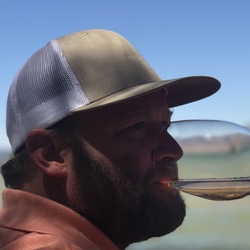
I found a house in St Helena last week and will be moving there at the end of May. I thought I should get acquainted with the neighbors. What better way than a face off?
.
Neyers Vineyards 2011 Neyers Ranch Cabernet Sauvignon vs Salvestrin Winery 2013 Salvestrin Estate Vineyard Cabernet Sauvignon.
.
Neyers Ranch is situated in the hills of Conn Valley just east of St Helena, with elevations ranging from 400’ to 1200’ on a south-facing, 50-acre parcel bisected by Conn Creek. Since 1998 Neyers has sustainably farmed this vineyard. Winemaker Tadeo Borchardt started in 2004 as assistant to then winemaker Ehren Jordan.
.
This Neyers was highlighted as one of the best of Napa’s 2011s in Jon Bonné’s piece for the SF Chronicle “Lessons from Napa in the trickiest of years” saying it “finds that great Cabernet balance of sleekness and dense flavor” with “pitch-perfect expression” and an “oregano-like herbal side frames its meaty structure and subtle blackcurrant fruit.”
.
Since 1932, three generations of Salvestrins have sustainable farmed their vineyard which was originally planted in 1860 by Dr. George Crane. It’s situated immediately south of St Helena High School and along Main St (Hwy 29), surrounding the family winery. Rich Salvestrin farms the vineyard and makes the wine, and his wife Shannon handles the sales and marketing, while they both raise the 4th generation on their farm.
.
Robert Parker gushed over the 2013, as “lusty, savory, hedonistic, rich and mouth-filling, with a dense purple color and not a hard edge in sight.” His praise did not stop there, saying that this “blockbuster fruit bomb has complexity, richness and a savory intensity that has to be tasted to be believed.”
.
The vintages were so different that it’s difficult to weigh them against each other. Bonné is definitely on point calling the Neyers one of the best examples of 2011 Napa Cabernet. Savory, with rich aromatics of Mexican cocoa powder and mole sauce, reminiscent of Corison’s 2011. To Parker’s credit, the Salvestrin is definitely a blockbuster and a hedonistic fruit bomb, but the savoriness, complexity, and length tone down its showiness, and add a level of decorum that sets it apart. — 8 years ago
Acústic Celler
Ritme Priorat 2013
Fabulously balanced cherry Priorat we had many of in Poland after the Power of Content Marketing conference — 9 years ago
Screaming Eagle
Oakville Cabernet Sauvignon 2009
Some wines are divisive because of the wine maker, others draw criticism for style or marketing or some other of a myriad of reasons. As much as I love my wine lover brethren the "haters gonna hate" description is very apt in our community. Screaming Eagle is one of those wines for sure. The prevailing criticism is that it doesn't merit the tariff or something similar. Well....this is my first SC since the '97 and it was absolutely f'n amazing and profound. Tremendous depth with bright, lively fruit, rich gravely soil, smoke and camphor. A difference maker. — 9 years ago



Domaine Clos des Rocs
Mâcon Loche Chardonnay 2015
Enjoyed over two nights and held up beautifully. One man does it all: "tends the vineyard, makes the wine, takes care of the marketing" — 10 years ago
Grace
Gris De Koshu 2013
Beautifully made wine from a non-traditional wine growing region. What impress me the most is the fact that it does not attempt to copy a popular, easy-to-pronounce, and most likely French varietal such as Merlot or Chardonnay for the sake of sales and marketing. Kōshū has been grown in Japan for 1000+ years . White peach, pear, and fresh cut grass on the nose. Delicate almonds, citrus and mineral on the palate. — 10 years ago
Domaine Eric Herault
Chinon Cabernet Franc 2023

Vintage 2023 | this family run domaine in Panzoult - since 1953 - has 27 hectares. Son Pierre has entered the company and he is an advocate for Chinon red wine. So he features as Superman in a label, modern marketing with a wink. Very energetic red. — a year ago
Kumeu River
Maté's Vineyard Chardonnay 2017

Kumeu River’s highly touted similarity to its French counterparts has by now been repeated so many times on various avenues that one might think it’s all just a marketing sham. On the contrary, there’s good reason for the claim, which was evident in this 17’ Maté’s Vineyard - blinded, it smelled and tasted so much like a Chassagne or Puligny… and dare I say… 1er cru. Serious nose which still needs time to integrate all the toasty oak characters. Aromas of white peaches and nectarines, ginger, some reduction, and hints of chamomile. On the palate, massive concentration with textures and length to match. Good acidity which gives it a mineral feel too. Honestly, it’s hard to call this a wine from New Zealand even after the reveal. Really impressive. Will look for older samples next. — 3 years ago



Raventos i Blanc
De la Finca Gran Reserva Cava Macabeo-Xarel-lo-Parellada 2015

I’m not sure about their whole story of not liking the DOC standards for cava , so they broke off to create their own level of control and accreditation?? But it’s good for marketing I guess and makes a light, citrusy cava — 8 years ago
Flora Springs
Trilogy Napa Valley Cabernet Sauvignon Blend 1993
They should have called the Winery Floral Springs based on the nose. Beautiful; blackberry, black raspberries, dark cherries, strawberries, dry cranberries and plum floral fruits. Nice spice, vanilla, touch of clove & cinnamon, used leather, dark rich soil, crushed volcanic minerals, black fruit tea, black raspberry cola and dark fresh florals with violets. The tannins are 95% resolved. The body is lush & ripe. The length, tension & structure are nearing the end. Just a few years left of being worthwhile. However, the balance is stereo tuned. The fruit on the palate shows even more elegant & ripe floral fruits than the nose. Blackberry, black raspberries, dark cherries, strawberries, dry cranberries and plum floral fruits. Nice spice, vanilla, light clove & cinnamon, used leather, dark rich soil, crushed volcanic minerals, black fruit tea, black raspberry cola and dark fresh florals with violets for days. The acidity is like a waterfall. The beautiful, long, elegant finish is a little lean yet has a nice richness. Beautiful wine that just missed 9.2. Photos top to bottom and left to right. The Winery; which is separate from the other tasting room only on Hwy 29. The tasting room on Hwy 29 in St. Helena, Flora Spring caves and the front of their tasting room along Hwy 29. Producer notes and history...the stone winery on the grounds were built in 1885 by two immigrant brothers from Scotland, James and William Rennie. They were in construction, built the winery and planted 60 acres of grapes. The brothers had some bad fortune when phylloxera consumed the vines, and then a fire in 1900 destroyed their wine press and cooperage. In 1904, they sold the winery and fifteen years later Prohibition started. The winery was then closed until 1933. That year, Louis Martini, looked into their magic eight-ball and saw Prohibition collapsing and bought the Rennie property. They built a new stone house and also made a reserve wine from the hillside vineyards. However, the old winery remained empty until the Komes family bought the property, 325 acres, the old farm house, the newer stone house and 60 acres of vineyards. The son thought he’d persuade his dad to restore the old winery and proposed to call it Chateau Jerome. Although it had been designed by Hamden McIntyre an architect of several other classic 19th-century Napa wineries, by 1977, the place was a wreck. The tin roof of the building had so many holes in it. They called it the starlight roof. His father looked at it and stated, “I’ve worked all my life for my good name. I don’t want to squander it now.” John’s mother, Flora, however, sided with her son on the potential of the property. Carrie Komes suggested they could name the winery for her mother-in-law. Combined with the abundant springs on the land, they decided the name would be Flora Springs. It was a sure way to their mom’s heart and father’s wallet. Komes put his construction expertise to work on renovating the old winery, which still had scorch marks on the walls. So skeptical was his father about his son’s wine-making project, they divided the winery building. John rented half where he put his first fermenting tank, which he named R2D2. He invited a couple of friends from his wine-making class to help make wine at the new place. He also hired Mary Ann Graf, who in 1965 had been the first woman to graduate from the viticulture and enology department at UC Davis to help manage the project. She told John, “if you don’t hire a winemaker, I’ll quit.” He did and the 1979 Flora Springs chardonnay won a gold medal at the Los Angeles County Fair. In those days, it was fairs, not ratings. This was his first lesson in marketing as they sadly sold all the wine before they won the medal. Fairs were the big news instead of ratings as Parker had not yet risen to fame as he was the only one to call the grand 1982 Bordeaux vintage correctly. They submitted their 1981 Cabernet to eight fairs and won seven gold medals. From there, the winery just kept growing. They were the 67th winery in the county. Over the years, they had their ups and downs, but kept growing. One of their highlights was the creation this wine, Trilogy. It was one of the first Meritage blends in the valley. By 1984, they planted all the Bordeaux varietals; Malbec, Merlot, Cab Franc, Cabernet Sauvignon and Petit Verdot. They wanted to create a blend “by taste”, not by formula for a nice smooth wine that goes deep into the palate. They worked with a little of this and little of that. The first Trilogy was Cabernet Sauvignon, Merlot and Cab Franc. It was dubbed as velvet in the mouth. A lot of what they do is taming the tannins. One man who bought Trilogy by the case said, “it’s the only red wine his wife would drink young.” From the leftovers, they began making single-varietal estate wines. Another highlight was the discovery of a unique clone of Sauvignon Blanc in vineyards his father bought in Oakville. UC Davis could identify nothing like it in their vast library of clones. They were a bit ahead of the times, but this clone showed Flora Springs how different in that time period what Sauvignon Blanc could be like as it took all the grassiness out of Sauvignon Blanc. — 9 years ago


Ubben Vineyards
Gracenote Carneros Pinot Noir 2014

Received this wine with a bit of fanfare. I am sorry to say it did not live up to its marketing. It is ok but not as smooth or as complex tasting as other Pinot Noirs I have had recently. It has a good aroma with a fruity taste. If it wasn't hyped so much I wouldn't have been so disappointed. — 10 years ago
Hundred Acre Vineyard
Ark Vineyard Cabernet Sauvignon 2008

While everyone talks about the Kayli Morgan Hundred Acre, I am still a fan of the Ark Vineyard. Haven't opened a bottle in over a year, and with the girls all in for Christmas, it was certainly the thing to do! After 1 1/2 hour decant, it was ready for first pass. Earth on the nose and then beautiful balance of fruit, tanin and a bit of oak. Think this one is ready now. No need to wait until next Christmas. Thanks Jayson Woodbridge for your 'inappropriate ' marketing letters! — 10 years ago

Pinotman /// Andreas
These used to be cheap - not any more 40$ for the new vintage this was 26$. Classic and super elegant. A ton of tannins left: 14%. Fermented dark olives. Dark cherries. Way better than the 2013 chianti reserva I popped for our italian dinner club. These are the wines kids should try - but hey our brillant marketing 🤡 priced them out of trying quality nebbiolo so they switch to cocktails and beer! Well done. Will go for 5-10 more years with ease. — 7 months ago