Verichon & Clerc
Antiyal
Red Blend 2015

#Remembrance #Love 6/25
One of our special stops in Maipo, Chile.
The day we visited, they had just received & were using their basic bottle labeling machine. They were elated to no longer have to do it by hand. 2018.
49% Carmenere, 42.5% Cabernet & 8.5% Syrah.
Picture of Sofia in Nefertiti’s Tomb. The top of Sofia’s bucket list.
The fruits are ripe and dryish; blackberries, black raspberries, black plum with big skin, plum pudding, darkest cherries & strawberries hues, creamy raspberries. Dark chocolate w/ fudge frosting, caramel, mocha, deep, dark spices w/ some palate heat, moist, forest floor with dry leaves, clove, nutmeg, soft cinnamon stick, vanillin, black tea, black licorice, dry river stone, moist, grey, volcanic clay, limestone & dry crushed rock minerals, dry top soil, some black pepper, dry tobacco & chewy leather, oak wood shavings, dry, withering & candied flowers, excellent, round acidity with a ruby, fresh, round, well; tensioned, balanced, knitted, smartly polished finish that lasts minutes.
Still has 10-15 years of good life ahead.
It was Bordeaux that first embraced Carmenere and the only Chateau that I know that still blends it is Clerc Milon…only about 2-3%. Chile champions Carmenere now.
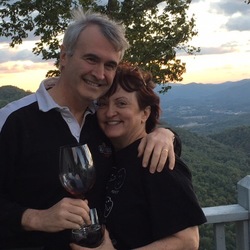
Photos; Sofia & I tasted on top of that structured & their barrel room. — 2 years ago
Fattoria La Traiana
Pian del Pazzo Toscana SuperTuscan Blend

Reminiscent of a nice Bordeaux like Clerc Milon. Beautiful cedar notes on the nose and in the glass. Fully integrated tannins with nice complexity. Worth a try from all of you francophones!!! — 5 years ago

Château Duhart Milon
Pauillac Cabernet Sauvignon - Merlot Blend 2006
The 06 vintage was more highly praised by the Bordelais than it delivered. That’s not to say, some producers didn’t deliver.
This 06 is not at its peak...still needs a few years. Will it be a wine that blows you away? Not likely but, it will deliver nice fruit, earth & balance. Especially, with a Ribeye.
The nose shows; ripe; blackberries, dark cherries, black raspberries, baked strawberries, dry cranberries & some black plum. Saddle-wood, limestone minerals, dry stones, cinnamon, soft spice, light vanilla, black rich earth, touch of black licorice and red & dark fresh florals.
The body is round and a little lean but puts on weight with food and decanting. The structure, length & tension are falling into place. The fruits are ripe and expressive. Blackberries, dark cherries, black raspberries, baked strawberries, haunting blue fruits, dry cranberries & some black plum. Saddle-wood, touch herbaceous, mint, limestone minerals, dry clay, dry stones, cinnamon, soft spice, cola, light vanilla, black rich earth, touch of black licorice and red & dark fresh florals. The acidity is round and beautiful. The finish is on the leaner side but, well balanced and lasts a full minute. 9.1 without the Ribeye, 9.2 with it.
Photos of, Duhart Milon, Cabernet ready to to be pressed, wine making facilities and their barrel room.
Producer history and notes...the Rothschild family is divided into two sects for lack of a better word. There are the ones that own Mouton Rothschild and Cleric Milon etc. and the other owns Lafite and Duhart. The two sides of the families don’t necessarily get along. However, they are two of the oldest/wealthiest families in recorded history.
Duhart Milon was originally known only as Chateau Milon. At one time the estate was the second wine of Chateau Lafite.
The story about how this came to be is interesting. The owner of Lafite at that time was the Marquis Nicolas-Alexandre de Segur. King Louis XV called him “The Wine Prince” because of his extensive vineyard holdings in Bordeaux. The Milon vineyards were well regarded but, not as good as Lafite, which is how the wine came to be thought of as the second wine for Lafite.
In 1815, the property was considered by some people as a fourth growth Bordeaux wine in the making. In those days, the wine was sold under the name of Chateau Mandavy-Milon. Between 1830 and 1840, the Casteja family inherited the estate.
The label of Duhart Milon, according to family tradition came about from an old legend written about one of their ancestors, Sir Duhart. Sir Duhart, was rumored to have been a pirate for Louis XV. He retired in Pauillac. The “Pirate’s House” on the Pauillac port existed up to the 1950’s. That original building inspired the label for the Duhart-Milon wines.
The Casteja family remained in possession of Duhart Milon until the first part of the 20th century. At the time, Chateau Duhart Milon was one of larger Pauillac estates with around 50 hectares of vines.
In 1937, the result of successive inheritances led to the sale of Duhart Milon. The Left Bank property went through five different owners in just 25 years. As well, the vineyards were split up and with the frost of 1956, the quality of Duhart Milon continued declining until the Rothschild family purchased the property in 1962.
At that time of the sale, Chateau Duhart Milon included 110 hectares of land, of which only 17 hectares were planted with vines. The entire vineyard was in desperate need of replanting. Major renovations were urgently needed in the vineyards, which demanded work on the drainage and replanting.
The size of their vineyards were also increased with the purchase of other parcels adding to the size of their Medoc holdings. New cellars needed to be built as well.
Chateau Duhart Milon remains one of the few 1855 Classified Growth estates without an actual Chateau. At Duhart, all you will find are the cellars, vatting rooms and barrel storages.
During the period of 1970 to 2000, the vineyards nearly doubled in size! Additionally, they constructed new cellars, renovated and modernized their wine making facilities as well in 2003. By 2008, the wine of Duhart Milon increased in quality, stature and price.
Much of the price increase had to do with the association with Chateau Lafite Rothschild, which had by that time, become the most in-demand, collectible wine in China. By the time the 2015 vintage was offered, prices had dropped to a more affordable price level due to changes in Chinese laws regarding client gifts/bribes.
The 152 hectare vineyard of Chateau Duhart Milon includes; 76 hectares of vines planted to 67% Cabernet Sauvignon and 33% Merlot. This makes Chateau Duhart Milon one of the few 1855 Classified Growths with only two grape varieties planted in their vineyards.
The average age of the vines are 30 years old. The vineyard is planted to a vine density of 7,500 vines per hectare.
Duhart Milon vineyards are located in northern Pauillac, on the western side of Chateau Lafite Rothschild, on the Milon hillside, which is not far from the Carruades plateau...now Lafite’s second wine. This places the vineyard quite close to Chateau Mouton Rothschild and Chateau Clerc Milon. However, because of micro climates, this is a slightly cooler terroir, due to its northern exposure.
The naturally cooler soils provides more freshness to the wine, and allows for later picking. The terroir of Chateau Duhart Milon is a combination of gravel, sand and limestone soils. The Duhart Milon vineyards are unique in Pauillac, as the vines are for the most part, located in 1 single, large parcel.
The vinification of Chateau Duhart Milon takes place in temperature controlled stainless vats. Malolactic fermentation takes place in vat. Chateau Duhart Milon is then aged in an average of 50% new French oak barrels for 14 to 16 months, depending on the vintage.
There is a second wine, Moulin de Duhart, that was created in 1986. There is also a third wine produced by the estate, Baron de Milon. — 8 years ago


Paul T, Missing My Beautiful Wife 24/7
I only drink wines that taste like Patent leather, soft leather is for sissy’s,😬

Guillemard-Clerc
Bienvenues-Bâtard-Montrachet Grand Cru Chardonnay 2021


Thomas williams — 2 years ago
Henri Clerc
Saint-Romain Chardonnay 2020

2020 vintage. Still great value with body, nose, punch and just enough acidity to cross the finish line standing and intact. 01.09.25. — 2 years ago




Varichon & Clerc
Blanc de Blancs

Light and crisp. Beautiful gold color — 7 years ago

Baronne Philippine de Rothschild
Pastourelle de Clerc Milon Pauillac Red Bordeaux Blend 2018
This was Pastourelle Clerc Milon. Second label of Clerc Milon, was quite good with some fruit, and reasonable price — 6 months ago
Château Ducru-Beaucaillou
Saint-Julien Red Bordeaux Blend 2012
Something for my Wagyu Burger.
I do enjoy this producers style/craft. Also, enjoy the elegance of St. Julien. 2012 is a vintage Sofia & 1 worked harvest at Clerc Milon. So, the 2012 vintage will always be a special vintage for me, even if it was only one that was good to very good for the right terroirs and producers. Just wasn’t special like; 00, 05, 09, 10, 16 or 19 etc..
Having said all that, this Ducru is not the 2012 star of the region. It’s elegant but falls short on depth, character & umpf, which are things I have grown to expect and have experienced from this producer in many vintages.
The palate shows, soft, round & velvety M-M+ tannins. Ripe; blackberries, black raspberries, dark cherries, some of both plums, slightly baked strawberries & circling raspberries. Slightly dry tobacco w/ ash, soft leather, sandalwood, mid, dark, rounded spice, nutmeg, clove, some cinnamon & vanillin, dark most earth with clay & dry leaves, herbaceous notes, very soft & elegant graphite, a touch of of mid berry cola/licorice, dark withering flowers, red roses, nice acidity with nicely balance, good tension/structured, elegant finish that last nearly two minutes and long sets on rounded dark spice.
@EmiratesLoungeDubai — a year ago

Baron Phillipe de Rothschild
Chateau Clerc-Milon Red Bordeaux Blend 1982
Beautiful garnet color. Smokey, musty, and earthy on the nose. Cedar, black raspberries, leather, and tobacco. Well integrated and not overpowering. Very satisfying finish. A real treat to drink a 40-year old wine that is so pleasing to smell, look at, and taste. — 4 years ago
Domaine Martin Clerc
Collines Rhodaniennes Syrah

More fruit forward than I expected from a Syrah. Still got the smoked meat aroma. Blackberries maybe?
— 5 years ago
Château Clerc Milon
Pauillac Grand Cru Classé Red Bordeaux Blend 2002

On the smell, blackcurrant, jamy notes and some light dry notes. Very good acidity and tannin. Rounded with a stewed black fruit taste followed by light banana and tropical fruits. Still some time with a good overall balance — 7 years ago
Henri Clerc
Meursault Chardonnay 2014
At frenchie lexus nyc. Floral. Dry. — 8 years ago
Somm David T
Independent Sommelier/Wine Educator
This is well beyond critical reviews young.
Sofia & I became friends with Jean D’Anjoy (photo to right). Winemaker who now runs all the Rothschild properties. He was the Assistant Winemaker at Opus One for 10 yrs. He had many offers to be a Napa Winemaker but refused. Had he, he would have been demeeded a Napa Winemaker when he wanted to always go back to Bordeaux as a Winemaker. Opus was fine as it is 1/2 French owed. He later became the the Clerc Milon Winemaker in 09. What a first vintage. He simultaneously built the new facilities at Clerc Milon. He is also perhaps the best & kindest human being I’ve ever met.
He arranged for Sofia & I to pick the Mouton Merlot and work all phases of the 2012 Clark Milon vintage. So, you might wanna not buy the 2012 vintage of Mouton & Clerc. 😂 He also arranged for us to sit at the Baroness’s table for the harvest luncheon where they poured the last of the filtered bottom of the barrels of 82 Mouton. I asked Sofia to pinch me. The Baroness sadly died two years later.
The nose is sweet and a touch sour; blackberries & black raspberries. Floral & slightly candied; dark and light cherries, juicy strawberries, raspberries and some circling baked rhubarb. Understated new oak barrel powder, beautiful baking spices-clove, nutmeg, cinnamon and vanilla, dry leaves and twig, baking powder, fresh and dry herbs, lead pencil shavings, limestone, dark soils, dry pebbles, red, and dark florals set in liquid violets.
The palate shows medium plus well rounded, softened, resolved tannins. The fruit is ripe and juicy. Blackberries & black raspberries. Floral & slightly candied; dark and light cherries, juicy strawberries, raspberries and some circling baked rhubarb. Understated new oak barrel powder, beautiful baking spices-clove, nutmeg, cinnamon and vanilla, dry leaves and twig, baking powder, mid, dark spices with a shade of heat, fresh and dry herbs, lead pencil shavings, moist to dry tobacco, used leather, limestone, dark soils, dry pebbles, red, and dark florals set in liquid violets, perfect acidity and a grand elegant, well balanced, integrated finish that lasts 90 seconds and lands on spice & earth.
An elegant beauty if I ever had one. Has another 5-7 yr ahead depending on storage.
Photos of; the new facilities at Clerc Milon, Jean D’Anjoy and their vineyards, barrel room and tasting/entertaining lounge.
Delectable & IOS 27 isn’t a good fit today. — 17 days ago