Growers Guild
Pyramid Valley Vineyards
Growers Collection Rose Vineyard Riesling 2015


2015 Vintage Honey ,dried apricot ,pineapple , kerosene , 14.8 abv but doesn’t seem like it 1.5 -2.0 % R.S.
Like but surprised by the alcohol nice acidity — 6 years ago


Chartogne-Taillet
Sainte Anne Brut Champagne Blend


One of my go-to growers. Lithe and pithy, with a stone fruit, lemon blossom brightness and a cool, almond dust breadth. The perfect way to start off the day at the new K Laz tasting room at Copia! — 8 years ago
Château Brane-Cantenac
Grand Cru Classé en 1855 Margaux Red Bordeaux Blend 2005
I have a six-pack of this 05. I thought after 10 years in bottle, it would be interesting to check in on its evolution. While tasty, I’ll wait another 8-10 to open another. Even after 2-3 hours in the decanter, it’s still a very young adolescent. On the nose, slightly sour blackberries & dark cherries, dark currants, baked black plum, haunting blue fruits, anise, whiff of spice, steeped tea, dry stones, dry crushed rocks with dry top soil, caramel, vanilla with fresh & dry red florals. The body is thick & full. Tannins are starting to round out. It’s velvety on the palate. The fruits are; bright, fresh & ripe and really show the greatness of the 05 vintage. Dark currants, blackberries, dark cherries, baked black plum, haunting blue fruits, baked strawberries, cherries, raspberries on the long set, dark spice, clay & loamy dry top soil with crushed rocks, dry stones, cigar with ash, graphite, dry stems, slight herbaceous character, mint, used leather, clove, caramel, vanilla, fresh & dry red florals with violets. The round acidity is about perfect. The structure and length are still strong. The balance is in harmony. As for the long finish, it’s lush, ruby, rich and well polished. Photos of; Chateau Brane Cantenac, large wood vats, Henri Lurton and Estate vines. Producer notes and history...Chateau Brane Cantenac began in the early 17th century. At the time, the estate was known as Domaine Guilhem Hosten. Even that far back, wine was produced from the property. In fact, the wine was so highly regarded it was one of the more expensive wines in Bordeaux. It sold for almost as much money as Brane Mouton. This is interesting because of who went on to buy the vineyard in the 1800’s. The Baron of Brane, also known as “Napoleon of the Vineyards”, purchased the Chateau in 1833. At the time of the sale, the estate was called Chateau Gorce-Guy. To get the funds needed to purchase the Margaux vineyard, the Baron sold what is now called Mouton Rothschild, which was at the time of the sale, known as Chateau Brane-Mouton. Not such a good move with hundreds of years in hindsight! In 1838, the Baron renamed property taking his name and the name of the sector where the vineyards were located and called it Chateau Brane Cantenac. The Chateau later passed to the Roy family, who were well-known in the Margaux appellation in those days, as they owned Chateau d’issan. Moving ahead to 1920, the Societe des Grands Crus de France, a group of merchants and growers that owned several chateaux located in the Medoc including; Chateau Margaux, Chateau Giscours, and Chateau Lagrange in St. Julien, purchased Chateau Brane Cantenac. Five years later, M. Recapet and his son-in-law, François Lurton, took over Brane Cantenac along with Chateau Margaux. Lucien Lurton (the son of François Lurton) inherited Brane Cantenac in 1956. Today, the estate is still in the hands of the Lurton family. Brane Cantenac is owned and run by Henri Lurton. After being given the responsibility of managing Brane Cantenac, it was under the direction of Henri Lurton that large portions of the vineyard were replanted. Vine densities were increased, the drainage systems were improved and the plantings were also, slowly changed. The vineyard of Brane Cantenac is planted to 55% Cabernet Sauvignon, 40% Merlot, 4.5% Cabernet Franc and .5% Carmenere. Carmenere was used for the first time in the 2011 vintage. The only other Chateau I know that still uses Carmenere is Clerc Milon. The 75 hectare Left Bank vineyard of Brane Cantenac is essentially unchanged since it earned Second Growth status in the 1855 Classification. At least that is the case with the 45 hectares used to produce the Grand Vin of Brane Cantenac. Those 45 hectares are planted surrounding the Chateau. Those vines are located just in front of the Cantenac plateau and are the best terroir that Brane Cantenac owns. They have other parcels, which are further inland and much of those grapes are placed into their second wine, Le Baron de Brane. Those additional hectares can be divided into 3 main sections. Behind the Chateau, they have 15 hectares of vines on gravel and sand, 10 hectares across the road with sand, gravel and iron and a 13 hectare parcel with gravel called Notton, which is used for their second wine. The vineyard is planted to a vine density that ranges from 6,666 vines per hectare on the plateau and up to 8,000 vines per hectare for the vines located behind chateau, in their sandier soils. The higher levels of vine density are always found in the newer plantings. The terroir of Brane Cantenac consists of deep gravel, sand and clay soil. Experiments in the vineyards are currently looking at becoming more organic in their vineyard management. Today, more than 25% of Brane Cantenac is farmed using organic farming techniques. It is expected that over time, the amount of hectares farmed with organic methods will be increased. Brane Cantenac has gone through 2 relatively recent modernization’s in 1999, when they added began adding the first of their smaller vats to allow for parcel by parcel vinification and then again in 2015 when they completed a much more complete renovation of their cellars and vat rooms. While Brane Cantenac is a traditional producer, they are no stranger to technology as they were one of the first estates to embrace optical grape sorting machines. In very wet vintages, they can also use reverse osmosis. To produce the wine of Chateau Brane Cantenac, the wine is vinified in a combination of temperature controlled, traditional, 22 oak vats, 18 concrete tanks and 20 stainless steel vats that vary in size from 40 hectoliters all the way up to 200 hectoliters, which allows for parcel by parcel vinification. 40% of the fermentation takes place in the oak vats. The oldest vines are vinified in vats that are selected to allow for separate parcel by parcel vinification. The younger vines are vinified more often together in the same vats. However, the Carmenere is entirely micro-vinified, meaning that those grapes were completely vinified in barrel, using micro-vinification techniques. This can also happen because the amount of grapes produced is so small. Some vats can be co-inoculated, meaning they go through alcoholic fermentation and malolactic fermentation simultaneously. At Chateau Brane Cantenac, malolactic fermentation takes place in a combination of French oak tanks and barrels. The wine of Brane Cantenac is aged in an average of 60% new, French oak barrels for 18 months before bottling. The initial 2 months of aging is done with the wine on its lees, which adds more depth to the wine. There second wine is Le Baron de Brane. Le Baron de Brane is not new. In fact, previously, the second wine went under the name of Chateau Notton, which took its name from one of the main parcels where the grapes were planted. During the late 1950’s and into the 1960’s, having a second wine was important as the estate declassified 3 vintages, due to extremely poor, weather conditions in 1956, 1960 and 1963. Production of Chateau Brane Cantenac is about 11,000 cases per year. — 9 years ago



Tawse
Growers Blend Niagara Peninsula VQA Cabernet Franc 2020

Dark berry fruit, minerality, soft-integrated baking spice. Medium, grippy tannins.
Great alternative to Loire!
Intensity: 4/5
Complexity: 3/5
Balance: 5/5
Finish: 4/5 — 9 months ago
Hartenberg
Cape Winemakers Guild Gravel Hill Shiraz 2018
Lovely blackcurrant nose, lots of dark fruit on the palate, fine tannins — 4 years ago
Reynolds Wine Growers
Julian Reynolds Reserva Alentejano Red Blend 2011
Portuguese dinner @ Oporto. Downtown Houston TX 🇺🇸 — 6 years ago
Reynolds Wine Growers
Vinhos Alentejanos Red Blend
@Vaudeville, Fredericksburg TX 🇺🇸 — 7 years ago
Bodegas Sierra Cantabria
Crianza Rioja Tempranillo 2013
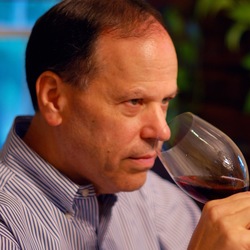
Founded by Guillermo Eguren, who is a self-made "bodeguero", coming from a family tradition of vine growers. Made from 100% Tempranillo, Ruby with fresh aromas of red fruits with sharp spice. On the palate raspberry and cherry with toasty oak notes, well balanced. Tangy citrus finish with cedar and tobacco on lively ending. Tremendous value, aged well, you will be impressed as I am! Good now but will improve over short term aging! A Fav!!! — 9 years ago
Cape Winemakers Guild (Rianie Strydom)
Auction Reserve Cabernet Sauvignon 2010

Marina notes on the nose. Briny salt air on palate. Black pepper. Tart cherry. Blackberry. — 9 years ago
Speri
Monte Sant'Urbano Amarone della Valpolicella Classico Corvina Blend 2017
Speris began working as vine growers in Valpolicella seven generations ago. Deep Ruby with aromas of dried berry fruits and sweet smoky spices. On the palate flavors of ripe plum and sweet berries with cacao, spice and fig flavors. Fine tannins, long complex rich finish ending with fruit, tobacco and earthy notes, good structure. Will continued to get better with age, good now. Sustainable. — 3 years ago
Cooper's Hawk Winery & Restaurant
Screen Actors Guild Awards Artist's Red Blend
Left is 2020 and the right is 2021
Both delicious — 5 years ago
Cooper's Hawk Winery & Restaurant
Twenty Fifth Annual Screen Actors Guild Awards Collector's Edition Artist's Red Blend

2/2019 CH Wine Club — 7 years ago
Tawse
Growers Blend Niagara Peninsula VQA Rosé 2016
One of my fave rosés I’ve had. Would buy / order if we could get it from Canada! — 7 years ago
American Pioneer Wine Growers
Virginia Dare American Chardonnay

Excellent...very smooth Chardonnay. 2014 bottle. — 9 years ago
Cape Winemakers Guild
Reserve Thelema Stellenbosch Cabernet Sauvignon 1989

Stunning - beautiful leather notes - at its prime - a South African gem. — 9 years ago
American Pioneer Wine Growers
The Lost Colony Dry Creek Valley Syrah Blend
Great value full of rich flavor - nice finish — 9 years ago
Vin d’Ottawa
When I opened this bottle a few days ago we rated it 8.8. After a few days of air, it’s in another world of complexity.
Sour black cherry into raspberry and with long mouth feel. This wine is exciting and we’ll be getting more! — 7 months ago